

LEVEL 01
R&D Strategy and Control
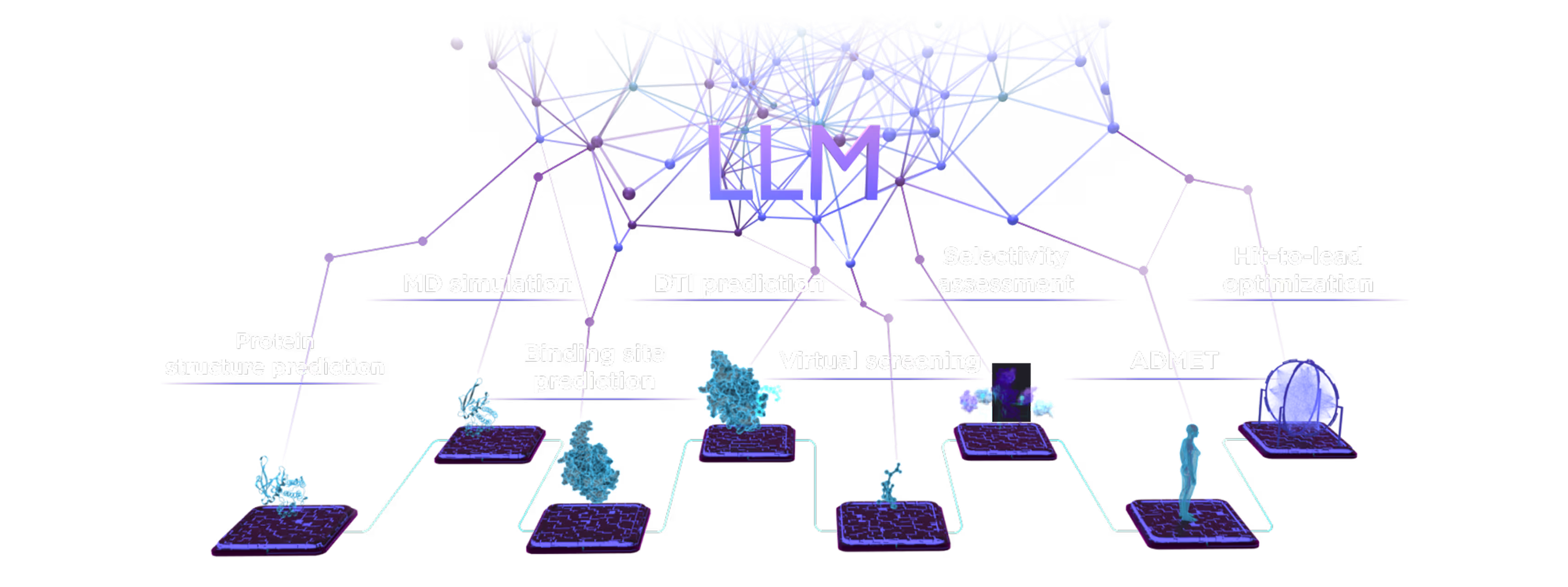
Agentic AI creates the R&D project plan based on validated drug discovery strategies, monitors its execution across all platform levels, and adapts it under expert oversight.
- Strategy selection: Agentic AI chooses the drug discovery strategy tailored to the scientific and clinical profile constraints.
- R&D plan design: Relying on the strategy, the system creates the project plan and assembles end-to-end drug discovery workflows for each iteration.
- Risk Assessment: The plan is analysed by domain experts who reveal and control all potential risks connected to the project.
- Strategic adjustment: The system iteratively revises the R&D plan based on intermediate experimental results, expert insights, and resource dynamics.
01
LEVEL 02
Drug Discovery Workflows
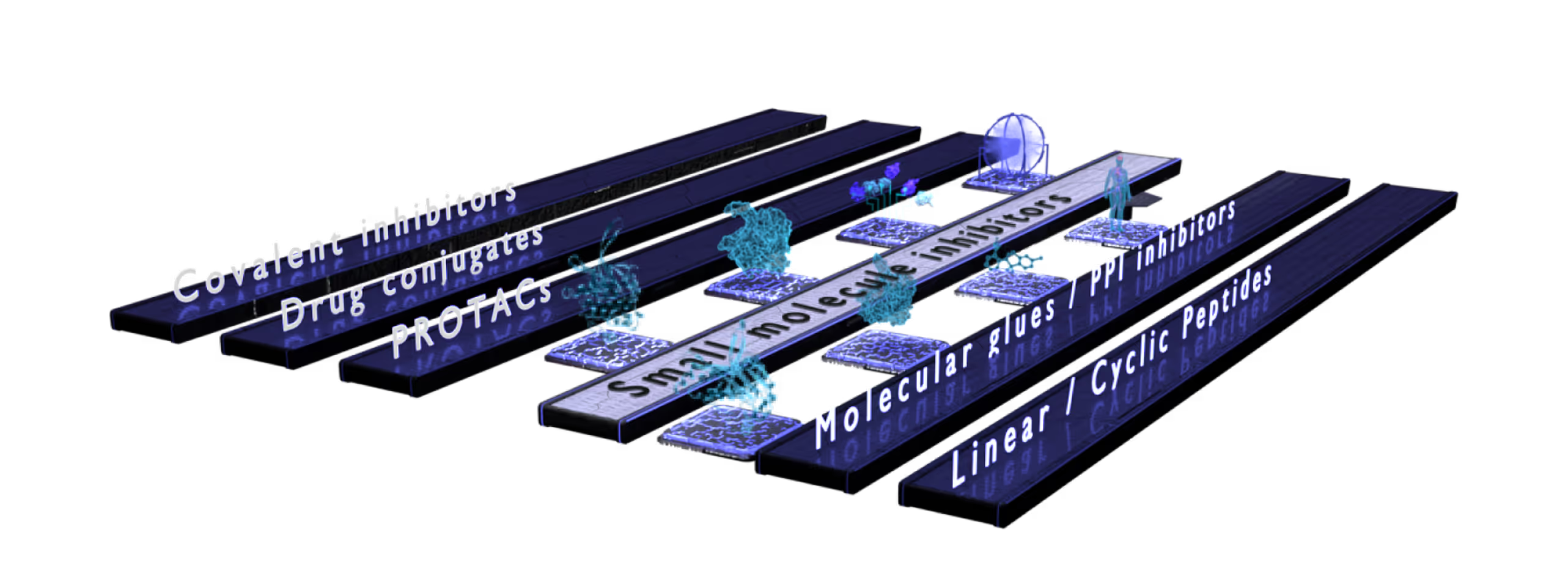
End-to-end drug discovery workflows tailored to the therapeutic modality and target class are selected and configured according to the R&D plan.
- Supported modalities: Small molecules, linear and cyclic peptides, covalent inhibitors, and various proximity-inducing agents.
- Target-specific protocols: Tailored workflows for GPCRs, kinases, ion channels, enzymes, and targets involved in PPIs.
- Dry + Wet lab integration: We align computational and experimental parts of the workflow by accounting for the target biology and mechanism of action.
- Experimental integration: Each workflow has an embedded active learning strategy that guides experimental data generation.
02
LEVEL 03
AI Model Stack
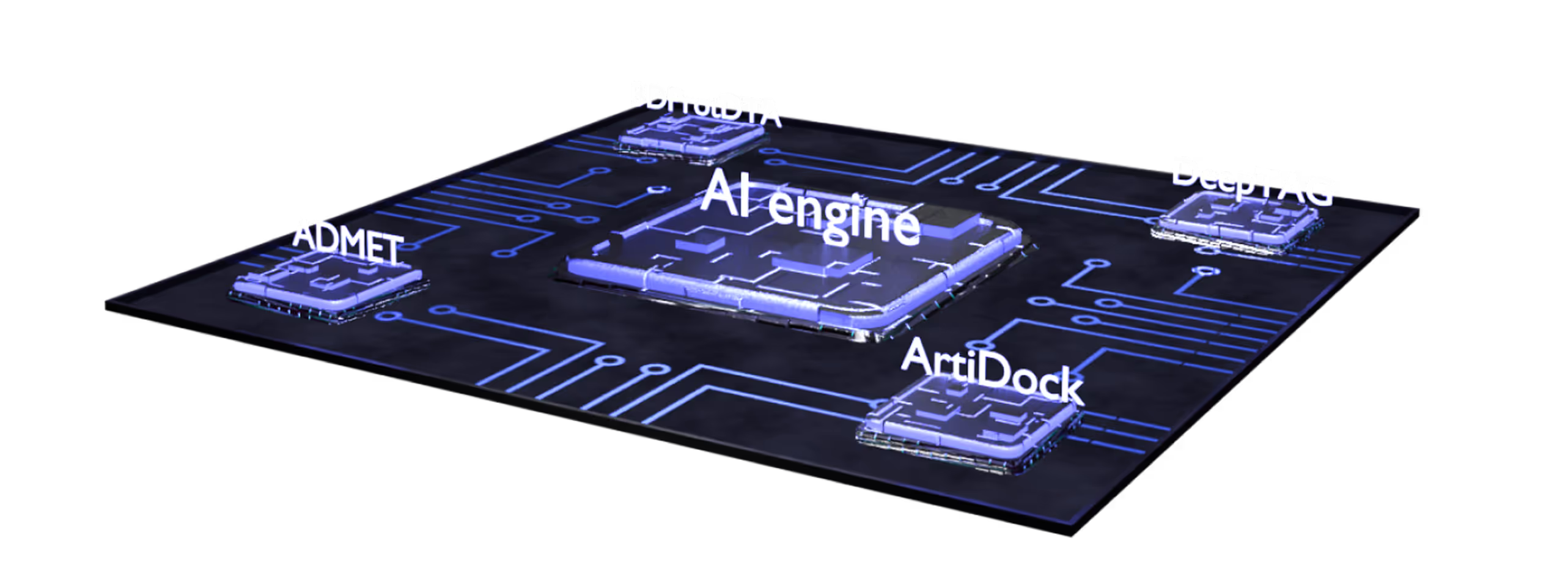
A suite of advanced predictive and generative AI models designed to power core drug discovery tasks and enable efficient, data-driven optimization across the pipeline:
- ArtiDock: A high-throughput AI-powered docking engine for both small molecules and peptides, trained on the world’s largest augmented dataset.
- DeepTAG: A next-generation model for predicting protein-protein interaction interfaces without requiring structural templates — a major step beyond traditional tools like AlphaFold.
- ADMET: An industry-leading ADMET prediction engine covering 80+ endpoints, incorporating consensus scoring that accounts for inter-endpoint correlations and mechanistic dependencies for superior decision-making.
- OffTaRGet: A comprehensive selectivity profiling tool that combines ligand-based and structure-based prediction to assess off-target risk across closely related and mechanistically distinct targets.
03
LEVEL 04
Data Engine
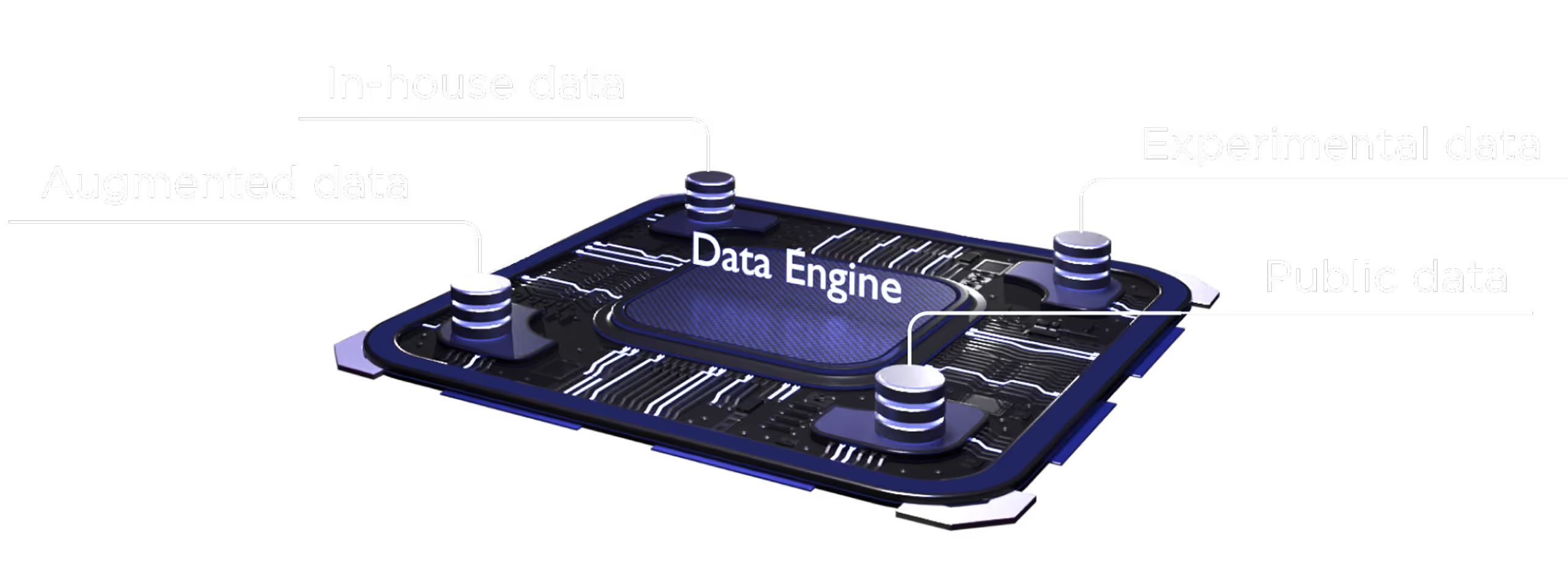
A secure data management environment for collecting, engineering, and analyzing project-specific data, enabling fine-tuning of our AI models.
- Public data integration: LLM-powered knowledge graph extracts and systematizes all publicly available information as the project starts.
- Feature engineering: Revealing hidden structure-property relationships through the analysis of both natural and artificially generated compound descriptors
- Data-driven project guidance: Uncovering hidden correlations and uncertainties in the initial data to steer the subsequent experimental rounds.
- Data augmentation: AI-based data generation that enriches sparse experimental datasets to support AI models' fine-tuning.
04
Co-development Programs
co-dev Program
indication
Target ID &
validation
validation
Early discovery
Lead optimization
IND-enabling
Phase 1
Small molecules
RAI-001
Nephrology
RAI-002
Oncology
RAI-004
Inflammation
Eilean Tx
Oncology
Eilean Tx
Nephrology
Eilean Tx
Oncology
Peptides
RAI-003
Cardiology


